 Return to main Personal Stories page |
||||
Al Hillmantel
email: [Contact David Hanauer for this e-mail address]
This Was My School
"Center School"
Yes, I was there and it wasn't yesterday, it was 65 years ago. The years I spent at Center School were between the years 1941 and 1949 and I spent all eight grades in that little one room school. It was located on Center School Road in Bedminster Township, Pennsylvania.
The school was on a parcel of land adjoining my parent's farm. This meant I only had to walk across three fields and I was there. This was good and then again not so good. It was hard to make up an excuse as to why you were late if it only took about five minutes to get there no matter how slow you walked. Also 65 years ago there were no busses to get you there, only your legs or if you were so lucky, a bicycle. These small country schools were spaced so the children wouldn't have to walk far the get there, about two miles between them at most.
Yes walk. The farmers in the area didn't have the time to take away from their chores to drive the young ones to school or the inclination for that matter. Their theory was, "I did it so why shouldn't they". In fact there were families who lived a mile and a half from the school and those kids never missed a day even if it snowed or rained.
School property was only about thirty paces by thirty paces as best I can picture in my mind. The school building stood in the middle. In the rear there was a combination coal bin and woodshed. To either side of the property in the back of school building there were the outhouses. To one side of the school there was a small area for the teacher's car to be parked. On opposite sides of the property were two ancient oak trees. That was it, Center School, my house of learning for the next eight years if all went well.
The school itself was small single room building containing twenty-five or thirty desks in the classroom, arranged in five rows with six desks in each row. Each desk had a seat in front then your back was against the desk in back of you. In my best years there were only twenty or so seats filled at any one time. As always grades one through eight attended at one time with one teacher.
 |
|
Picture from Chicago Historical Society
|
The seats pictured are single person desks. We in our classroom had some that were doublewide even though only one student sat in it. The inkwells were left empty, the students now used pencils and later on, a new invention called"A Ball Point Pen". Books and personal things were put in the space just below the desktop. No one ever even considered taking or disturbing some one else's things.
Each person had their assigned desk, which they held till the end of the school year. Then after being advanced a grade they moved toward the rear of the classroom. The beginners or first graders always started in front in the first seats. It seems to me that certain grades were also moved from one side of the classroom to the other. For instance fourth grade sat on the left side of the room and fifth on the right.
The teacher's desk was in front of the class and faced so she could see all that went on. It was positioned off to the side so those going to the blackboard wouldn't have to walk around it. Her desk was the only formal type office desk with a swivel chair. It would have been blasphemy to even go near her property.
Up in the front of the classroom was the "Blackboard". It was an impressive thing that leered at you as you sat in your seat. Ours spanned across the whole front wall and was black and made of solid quarried slate. It started about thirty inches from the floor and went up another four feet. On the lower edge was the little shelf for the chalk and the ever-present erasers. Over top were large cards depicting the alphabet in upper and lower case script writing. These letters were to be imprinted in our minds so any writing we did was according to the Palmer Method of penmanship. To get to the blackboard you had to step up onto a small landing that was across the front of the room. The step up was only about six inches but according to how nervous you were, you sometimes didn't see it and did a stumble into the blackboard.
There was a task that everyone volunteered for, and that was to gather the blackboard erasers and take them outside and clap them together to get rid of the chalk dust they collected. The only bad thing was if you went outside with someone older you might come back in with a white mark on the back of your head where you got whapped with an unclapped eraser.
When you were in one of the lower grades and the teacher called upon you to go to the blackboard it was a test of your courage. You would have to get up, walk from your seat across the space from your desk to the raised platform in front of the blackboard and across it to the blackboard itself. You knew that everyone in the classroom behind you was watching and maybe even making faces behind the teachers back so she couldn't see. By this time you forgot most of what you learned in school so far. Then since you were just a little guy you wrote real small and everyone would holler, "I can't see what he wrote".
Sometimes a music teacher from one of the larger schools would stop in and entertain us with his record player. That was a treat to hear the musical story of Peter and the Wolf and he always ended his stay by playing Kate Smith singing "God Bless America"
 |
|
Picture found at www.suite101.com
|
At one end of the upper front wall a picture of George Washington and across from it another of Sir Galahad. I don't know what significance he had in our school system, but there he was in his armor.
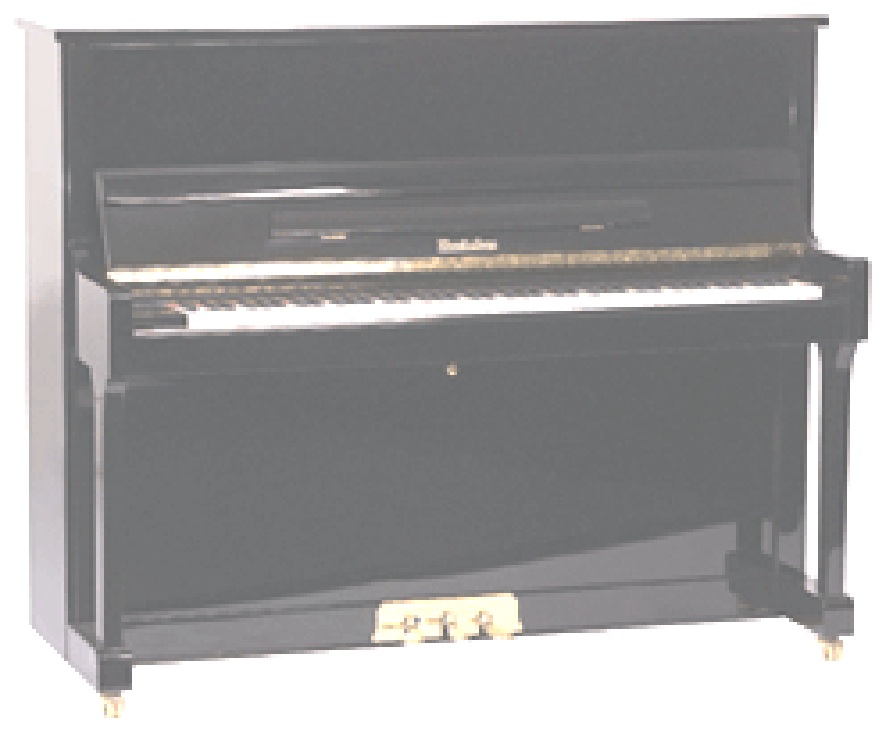
To the right side of the room in front there stood the piano, an old upright that hadn't been tuned in at least a hundred years. I believe it may have harbored families of field mice who found their way in from the cold. It seems as long as I went to that school there was always some one in one of the classes who could play the piano. Over it hung the American flag. There was one other flag and that was on a pole in front of the school building. Assigned people would raise it in the morning and lower it each days end.
 |
|
Picture From www.mildren-pianos.co.uk
|
To the rear of the room and off to one side was the stove that kept us warm during the winter months. It was big and round and taller than the oldest boy in the school. It had a steel shield around it so some unsuspecting youngster wouldn't go up and touch it. To tend the stove one would have to open the shield and then the stove door. Even on the coldest days in winter we were never uncomfortable anywhere in the classroom. Some one was always assigned to go to the coal bin to bring coal for the fire. This was considered a privilege.
In winter time when the stove was going some kids would bring in a large potato from home. The teacher would put a couple cuts in the top of the potato and the place it on top of the stove. By noon that lucky person would have a baked potato for his lunch. Same thing went if you brought in a little pot with some soup in it.
To the rear or entrance of the schoolroom and off to each side were two adjoining rooms known as "Cloak rooms". One was designated "Boys" and the other "Girls". Here during bad weather the children kept coats, boots or whatever they wore to school on bad days. It was also where you put your lunch box till noon.
In the boys cloak room you found the drinking water. No, we didn't have running water in this school, anywhere. To get water to drink or wash your hands the teacher assigned two older boys to take the water pail, a bucket type of container with a lid, and walk to the nearest farm to fill it in the barn and carry it back on a broomstick between them so we would have water for drinking and washing. The nearest farm where we could get water at that time was about one quarter mile distant. To get a drink during class hours you had to raise your hand and ask permission. There was one drinking cup, which everyone used. At lunch time everyone lined up with the oldest first and the teacher made you wash your hands before you ate. If you were in the lower grades the water often might be muddy by the time you got there. The teacher had the ability to determine how much water we could use so we would not run out lest there be an emergency.
Running water was never installed in our school. It was only after a long battle with the local farmers that they conceded into running electricity into the classroom. It may have been 1946 or 1947.
 |
|
Picture from missourifolkloresociety.truman.edu
|
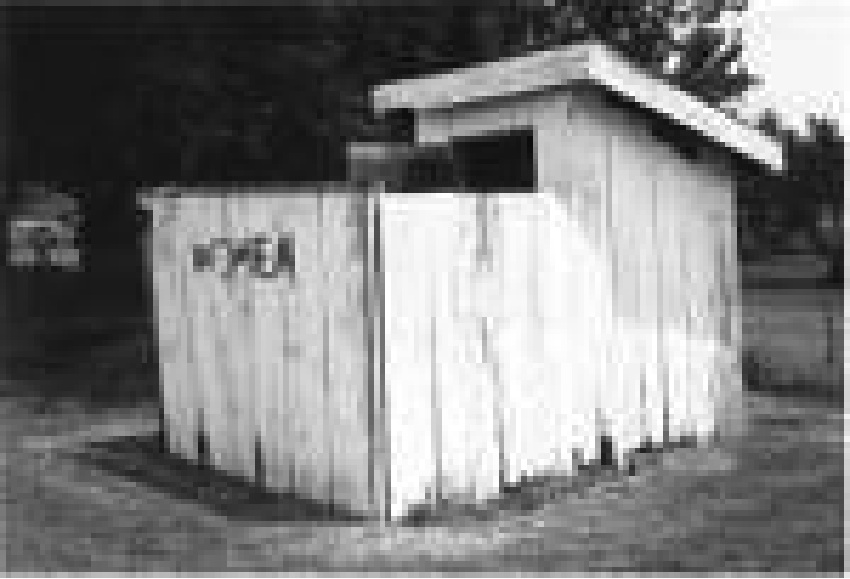
Since there was no running water inside the schoolhouse you also didn't have any bathroom facilities inside the building. In the back of the schoolhouse on either side there was a small wooden structure called "The Outhouse" similar to the one shown. One was for the boys and the other for the girls.
These buildings were a nightmare if one was not accustomed to them. Being outside they were subject to all the forces of nature, summer and winter. They were also the homes to many of the areas living creatures. When you walked into the building you were approached by whatever insect flying or otherwise that called it their home. You could at different times of the year meet wasps, hornets, ants, spiders and an occasional sparrow that got lost in the eaves. To sit down on the wooden seat which was part of the structure and not lift-able was scary. No one could imagine what was just under you, a mere inch thick piece of wood away. In the eight years I went to that school I never, and I emphasize, never sat down on that seat. The only important roll other than personal needs that these buildings served were hiding places during recess games.
Class activities were basic and cut and dried with very little deviation from a set pattern. In the morning we would begin by reciting the Pledge of Allegiance, then some one would read a short piece out of the bible and all would say the Lords Prayer. Then some one with musical ability would play the piano and all would sing along. Sometimes the teacher would ask for a choice of songs and we made suggestions. We would pick songs like "My Bonnie Lies over the Ocean" or "Row-Row-Row your Boat" or "A Bicycle Built for two" or everyone's favorite "Church in the Wildwood". This was a great thing because everyone sang as loud as they could. After singing we all settled down for some serious learning and it was basically the "Three R's".
In those days there was no Kindergarten class. You began your learning in the first grade and were immediately introduced to reading whole words. The teacher taught you to recognize words as a whole without too much time on sounding out the letters. Using this method after one week a child could already read short sentences from his book. Writing was almost all in cursive script with long practice pages of the Palmer Method. Block printing was only used in drawings and making maps in Geography class.
After the teacher went over a few subjects with different grades we would have recess, a break.
If it was in the wintertime all would rush into the cloakrooms grab their jackets or whatever to keep warm and run outside to get the most out of this period. Since this was a rural school in the 1940's and in the country there wasn't too much in the way of recreational playground equipment. We had one jump rope, a piece of knotted wash line some one brought to school, that the girls usually grabbed right off. If someone may have brought in a tennis ball or maybe a well-worn baseball and we had a game going. We never had a real baseball bat. A longish piece of firewood from the woodshed did quite well. If you were lucky enough to own a bicycle you could take part in the race around the schoolhouse at breakneck speeds till someone fell on the gravel. Or you could be playing Hide and Seek with only six places to hide behind...the schoolhouse, the coal bin/woodshed, the two outhouses and the two oak trees.
There were no horizontal branches on the Oak trees so we didn't have a swing. As you might tell schools were not fashioned around playground activities. Anything we wanted for games we made do with what we found.
The farmer down the road whose field joined the schools property had put up an electric fence for his cattle. This gave us the opportunity to see who was the bravest and hold onto the fence wire the longest. It made you jump around a lot and your arm ached for a while afterward. In winter when there was a covering of snow on the fields we could play a form of tag in paths and blind ends we tromped into the snow. The frozen pond across the street made for contests on who could run up to the ice and slide the furthest.
 |
|
Our School Picture, all eight grades with teacher. I and my younger brother are the only ones wearing plaid shirts, center row left and front row third from left.
|
At one time one of the parents of the younger children must have complained to the school board that the younger ones did not have any thing to keep them occupied during recess. So the school board got some farmer to cut up some 2x4 and make a set of blocks to play with. This was the extent of playground equipment at Center School.
Once each year an Officer from the Pennsylvania State Police would stop in to visit us. He would give us a short lecture on safety while riding our bicycles on the roads and staying accident free in our homes. Then the big one!! He would have a projector and show a film on whatever subject was in his lecture and then, are you ready, a cartoon. To us this was like going to the movies with your parents on a Saturday evening.
Then once every year or two a photographer came to all the schools to take pictures of the kids. These weren't individual ones as is done now but ones of the entire school including the teacher. The one shown was of our school of 1948. The teacher and all eight grades are shown.
Discipline was another matter in those days. The teacher had absolute rule and was obeyed without question. We were asked for an opinion if the subject warranted but the teacher had the last word. If there was an infraction of the rules there was the device of chastisement kept by the teacher in her desk. It was a paddle made of wood. It measured about one half inch thick, four inches wide and eighteen inches long. The guilty one was ordered to bend over and the teacher would deliver the number of swats that she deemed appropriate for the violation. As I can remember it quickly made its intended impression and everything went back to normal. I have known most of the schoolmates for many years and never noticed any psychological damage done by those punishments. Although I never had the opportunity to experience it I did see it used a number of times on those who did.
The building was used as a school for only one more year. At the end of the school term of 1949 it closed its doors, June of that year, for good. In the fall of that year I went on to Hilltown High School in Blooming Glen, Pa. and my only eighth grade classmate went to high school in Doylestown, Pa. It was also that year that school busses began running in our area. The remaining students were then picked up each morning near their homes and taken to other one-room schools teaching those grades. The era of eight grades in one school had come to an end.
All our desks, which were removed from the floor, were sold. The desks if examined closely revealed a veritable history of those who sat in them and had many, many sets of initials carved into the top. As far as I know the last remaining object to leave the school was the bell on the roof. The building remained closed for a number of years until it was sold to a family and was converted into a private residence.
-- October, 2006
–––––– ◊◊◊◊◊ ––––––
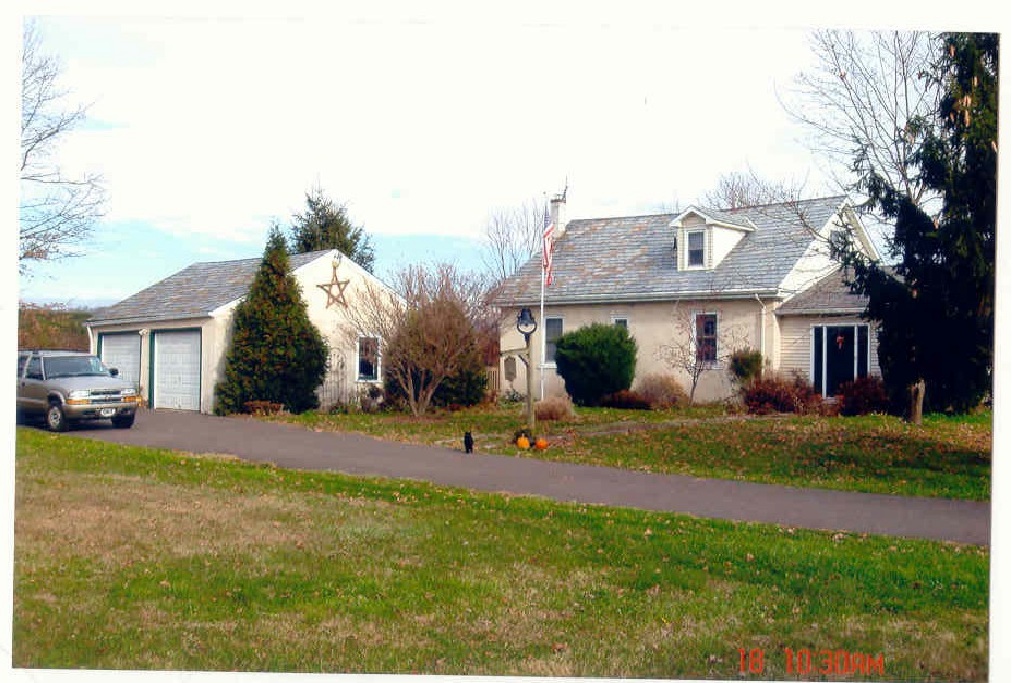
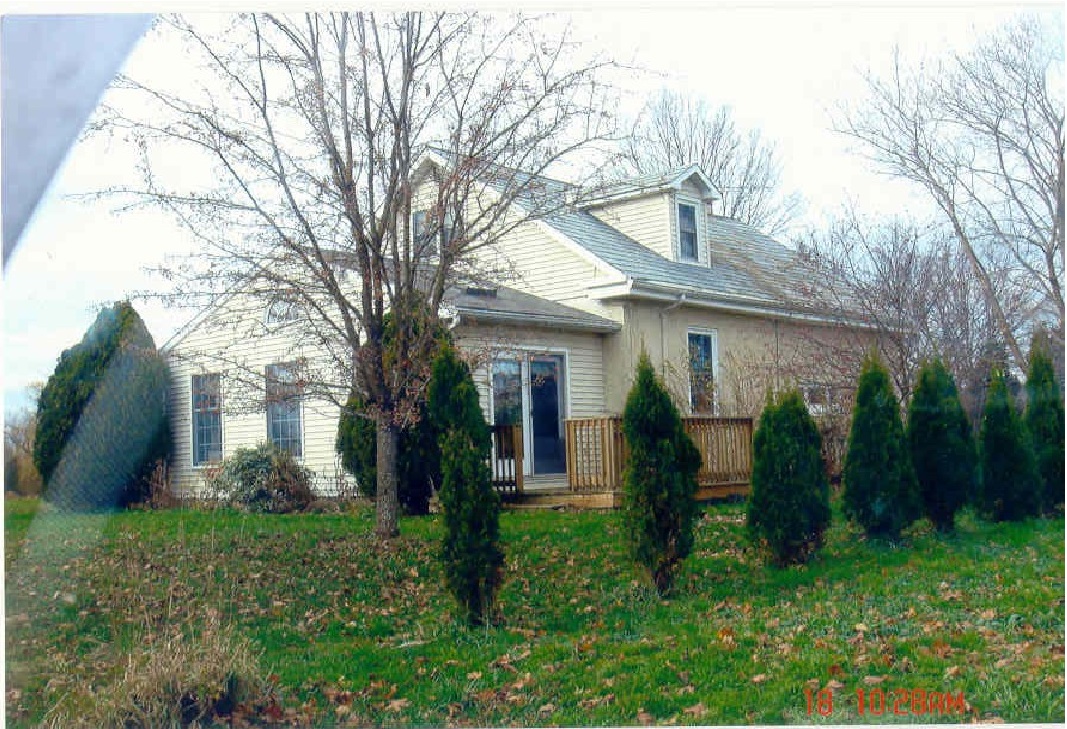
The "One Room Schoolhouse" to my amazement still exists. My niece who lives nearby took the photos of both farm and school. The school has been modified to suit the new owners. The bell cupola on the roof has been removed. Two roof dormers, one on each side, and a two-car garage added out back. To orient ones self, see the photo with the flagpole and pumpkins on a side view. The position of the flagpole is the approximate position of the group of children on the old class picture.
The two gigantic oak trees are gone but at least the building didn't succumb to a bulldozers blade to be replaced with a "new" modern dwelling. I am also sending you a few lines and photos of the farm I was raised on to make a connection of my life to the school.
-- November, 2006
 |
|
Looking at the school, left view. The driveway goes out to Center School Road.
|
 |
|
Looking at the school, right view.
|
–––––– ◊◊◊◊◊ ––––––
Moving to Perkasie
Although I was born in Philadelphia and raised there until I was five years old my connection with the school didn't begin until my family decided to sell their home in the city and move into the country. It wasn't an easy choice since my father managed a large machine shop in the city. But with the persuasion of my grandfather everyone decided to get away from the congestion and the hectic pace of city life.
 |
|
The farmhouse as seen from the meadow. The addition on this side was built in the mid fifties. To the right of the picture was an apple orchard of fifteen or twenty full size fruit producing trees.
|
My father and grandfather purchased the farm jointly in 1939. Our family had lived in South Philadelphia at that time and had done so since they emigrated from Europe. No one really had any great experience with farming before but took a chance and moved, everything, lock stock and barrel to "The Farm" in Perkasie, Pennsylvania.
The farm of more than fifty acres was purchased for far less than what we now pay for a well used automobile. But of course in those days most farms had no electricity or indoor plumbing and these were the first amenities that were installed for our family. So you can see that life on a farm was not the lifestyle we were used to as city people, especially if one had been accustomed to the more modern comforts of their previous home.
 |
|
Myself at 4½ years showing corn from the field. Front side of barn is shown.
|
My father was still manager of the shop so my grandfather took it upon himself to become a farmer. He learned quickly and soon he was a man of the land.
The farm in its earlier days must have been self-sustaining and profitable for the owners. There was the main house. Next to it was a "Summer Kitchen" where all cooking was done in the summer to keep the heat out of the house kitchen. Right next to that was the shop with basic maintenance tools to keep the farm machinery running. There was one large chicken coop at the far end of the barnyard area. There was a large shed with two bays for horse drawn harvesting equipment. There was a large two-sided corncrib with a drive through in the middle. Then next to the barn was a two-story pigpen. It could keep six or eight pigs downstairs with an outside access for them. Upstairs above the sty was a large storage area for food and bedding for the animals. And last but not least, since there was no indoor plumbing, there was the outhouse.
 |
|
Side view of the barn. To the left of the barn is the two story pigpen and the right the storage shed for horse drawn equipment.
|
The farm was around fifty-five or sixty acres which was divided into eleven fields. The borderlines of each field were lined with fruit and cherry trees. There was never a lack of goodies to snack on in the summer and much for the ladies to preserve for the winter.
My brother and I in our childhood explorations discovered many things left by the old residents. In the barns lower level there were ten stalls for cows and four stalls for four very large horses, estimating from the width of each stall. Many of the leather reins and halters for farm work were still hanging in the stall area.
 |
|
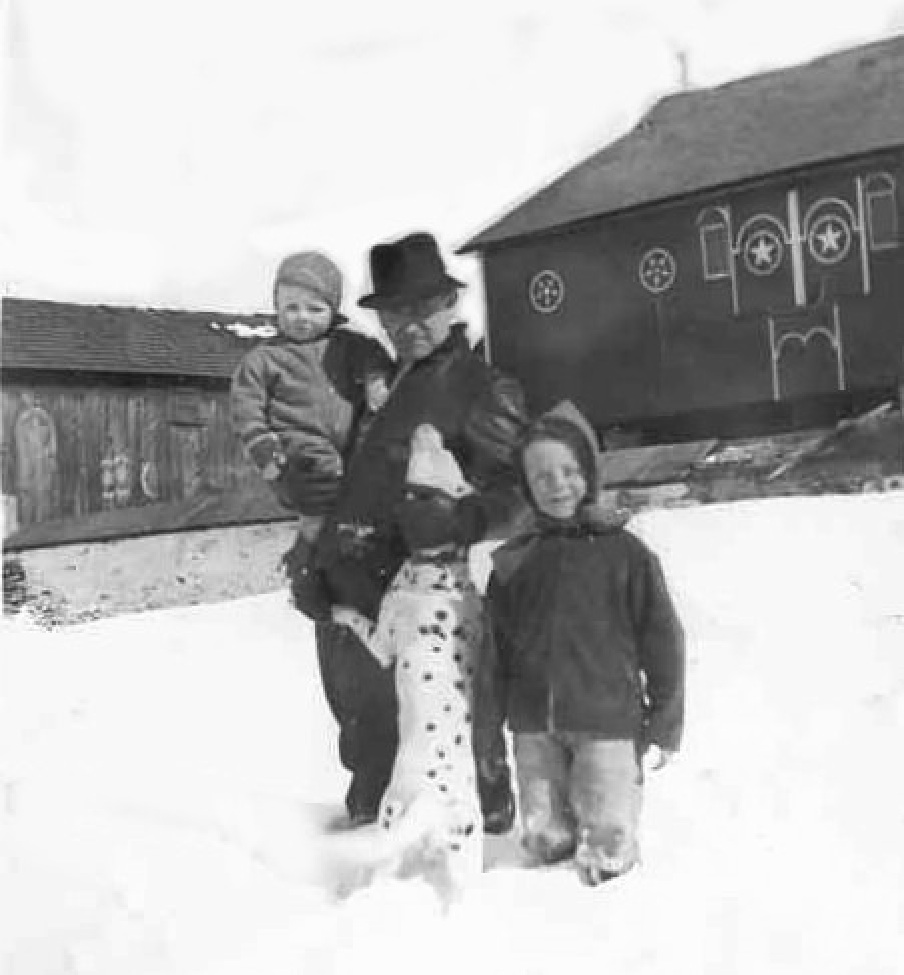
Father, younger brother and myself.
First real snowfall, 1940.
|
The farm to my younger brother and I was a constant source of learning and information. There was a large stream running through the farm. When my brother and I got older it gave us a place to swim, go fishing and in winter a great place to skate.
To me those early times were kind of idyllic with very little to do except learn what I could with my grandfathers tutoring. Since my grandfather was raised in Europe he had some knowledge of what it a farm was all about and taught me new things daily.
 |
|
View of the rear of the house. It was my time to become familiar with the farm equipment.
|
This is basically what my early days on the farm exposed me to, until I was old enough to enter the first grade. No, there was no Kindergarten in those days especially in a rural farming area.
And now to the important part of my education, beginning with the first day at school...
To get to the school we would walk out of the house, go through the space between the barn and the storage shed. Then over three fields, about 720 meters and there you are at the school. Total time walking was about five to ten minutes depending on the weather or what caught our eye on the way. If I rode my bicycle it took three minutes at most. On a clear day if the wind was right you could hear the school bell ringing.
-- November, 2006